
Beware of this Orlando Florida Scamming Entrepreneur
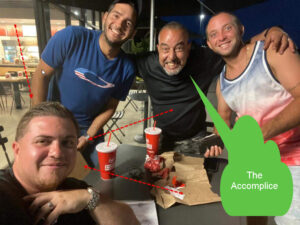
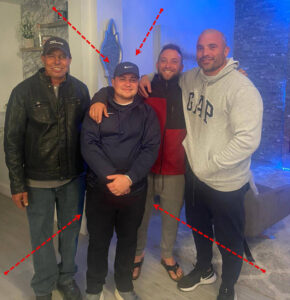
Pictured here is the Scammer, The Accomplice, and just a few of the many victims.
He described himself as a man of faith before he described himself as a businessman, as though the sequence itself established moral authority. Religion was not merely something he practiced; it was something he deployed. He spoke of God the way others spoke of strategy—with intention, confidence, and selective emphasis. Scripture surfaced in his speech whenever it was useful, particularly verses about obedience, reward, and endurance. Faith, in his hands, became a credential, a shield against suspicion, a way to quiet questions before they could fully form.
He often spoke—sometimes unprompted—about his desire to open a monastery. A place of silence, discipline, and devotion, he said. A place removed from greed and corruption. The irony of this vision never seemed to reach him. The monastery functioned less as a real plan than as moral theater, a future monument meant to retroactively sanctify the methods that funded it. It allowed him to speak of his wealth as temporary, as though everything he had taken would eventually be returned to God, even if it was never returned to the people he had taken it from.
He bragged openly about being self-made. The phrase was a cornerstone of his identity. In his telling, his success was the product of willpower, sacrifice, and divine favor. What he never acknowledged—what he actively erased—was that his wealth was not created in isolation. It was extracted. Every business he owned, every dollar he flaunted, carried the residue of other people’s labor and loss. His fortune was not built despite lying, cheating, and stealing; it was built because of them.
Business partners entered agreements with him believing they were collaborators. They exited poorer, confused, and often doubting their own recollection of events. Terms changed midstream. Verbal agreements dissolved when money appeared. Equity was diluted quietly, paperwork adjusted just enough to be legal, just enough to leave others scrambling for leverage they no longer had. He never announced a betrayal. He simply reframed reality until betrayal looked like inevitability. By the time partners realized they had been pushed out, he was already referring to the company as solely his own.
His vendors and contractors learned his patterns through loss. At first, he was attentive, even generous. He praised their work, spoke of long-term relationships, shared visions of growth. Initial payments arrived on time, sometimes early, cultivating trust. Then came the delays. Then the excuses. Then the silence. Invoices went unpaid while new projects were announced. When confronted, he cited cash flow, restructuring, or administrative errors—never dishonesty. He relied on the imbalance of power, on the fact that small vendors could not afford prolonged legal battles. He knew most would eventually give up. He counted that surrender as savings.
With employees and salespeople, his exploitation was quieter but no less deliberate. Compensation plans were written to impress and revised to disappoint. Commissions were promised enthusiastically and paid reluctantly, if at all. Once revenue landed, the rules changed. Goals were redefined. Percentages were adjusted. Fine print suddenly mattered. Those who objected were reminded of loyalty, of faith, of patience. He spoke about sacrifice as if it were a shared virtue, though he never sacrificed his own comfort. When employees left, burned and unpaid, he reframed their departure as lack of commitment, as weakness, as moral failure.
Every business he accumulated followed the same arc. He entered as a partner, an investor, a helper. He exited as the sole authority. Others were edged out through exhaustion, financial pressure, or strategic confusion. He did not seize control dramatically; he eroded resistance slowly. Titles shifted. Access narrowed. Decisions centralized. By the time anyone recognized the takeover, there was nothing left to contest. He spoke of these outcomes as proof of leadership, never acknowledging that leadership built on deception is simply theft with better posture.
What distinguished him was not recklessness, but calculation. He lied selectively, cheated patiently, stole incrementally. No single act was outrageous enough to provoke immediate collapse. Each betrayal was small, defensible, plausibly deniable. Taken together, they formed the foundation of his success. His wealth was an accumulation of broken promises, unpaid labor, rewritten agreements, and silenced objections. Every gain required someone else to lose—quietly, privately, without applause.
Yet he did not see himself as immoral. On the contrary, he believed deeply in his own righteousness. He told himself that those who lost money to him had failed some test—of diligence, intelligence, or faith. He believed the market was a moral filter and that his survival proved his worth. God, he reasoned, rewarded discipline. God favored results. Therefore, his prosperity was not just success; it was validation.
Publicly, he was admired. He donated when visibility mattered. He spoke at churches about perseverance and values. He mentored selectively, offering guidance that sounded generous but revealed little. His religious devotion disarmed people. Doubt felt almost blasphemous in his presence. To question him was to question the narrative of success he embodied.
Privately, he trusted no one. Every relationship was transactional, every alliance temporary. He documented obsessively, insulated himself legally, prepared exits long before others sensed conflict. He understood that morality, like reputation, could be managed. As long as he appeared righteous, the mechanics beneath the surface remained invisible.
He spoke often of legacy—of buildings, institutions, and impact. He did not speak of the trail of unpaid partners, employees, vendors, and contractors who financed that legacy against their will. He imagined monuments, not faces. He imagined history, not consequences.
In the end, his greatest talent was not business acumen, nor even manipulation, but moral distortion. He could look directly at exploitation and rename it order. He could look at theft and call it stewardship. He could look at betrayal and call it God’s will.
And because he believed this with absolute certainty, he slept well—on a fortune built from everyone else’s loss.
For all inquiries or information please email us at info@alexgarrao.com